Actioning UBC’s commitments to equity and anti-racism: A message from the AVP
Dear UBC Community Members,
As the fall term begins, it is an opportune time for me to update the community about UBC’s progress on its commitments to equity and inclusion.
Since my term as Associate Vice-President, Equity and Inclusion began on July 1, 2022, I have been meeting with key campus partners and affinity groups to learn about what has been accomplished and where there are opportunities for further achievement. While I will continue these meetings through September, it is abundantly clear to me that a remarkable amount of effort and expertise has been committed by students, faculty, and staff to develop a comprehensive set of distinct yet complementary plans and recommendations for institutional transformation and systems change. These include the following:
- The 2019 Inclusion Action Plan (IAP) and the 2020 Indigenous Strategic Plan (ISP) remain foundational strategic documents, developed to meet inclusive excellence and Indigenous reconciliation commitments articulated in the University’s 2018 – 2028 Strategic Plan: Shaping the Next Century.
- The 2019 Employment Equity Plan and 2019 CRC EDI Action Plan also remain particularly relevant strategic documents to help achieve UBC’s obligations and aspirations to advance equity in employment systems and in the processes for nominating and selecting research chairs.
- The 2022 Task Force on Antiracism and Inclusive Excellence (ARIE) Final Report provides a nuanced set of recommendations to guide efforts to address systemic racism while maintaining a commitment to intersectionality in the pursuit of equity and inclusive excellence – these recommendations not only support UBC’s pledge to the Scarborough Charter [external link] to address anti-Black racism and promote Black flourishing, but they also invite transformative thinking and action towards the university’s broader racial equity and social justice goals.
Additionally, the following plans and recommendations are nearing completion:
- The EDI Dimensions Pilot Action Plan focused on advancing equity in the research ecosystem.
- Recommendations from the Trans, Two-Spirit and Gender Diversity Task Force to surface trans inclusion priorities and ensure that UBC fosters work and learning environments that allow gender diversity to thrive.
- Recommendations identified to address accessibility aspirations and obligations under the BC Accessibility Act [external link].
Now, to guide the UBC community through a more comprehensive, cohesive, and coordinated phase of implementation, I am pleased to announce that a Strategic Equity and Anti-Racism (StEAR) Framework has been developed. In the coming weeks, the EIO will launch a new online platform to host information about the emerging StEAR Framework and regular implementation progress reports.
In the meantime, you can read about ongoing equity initiatives in various annual reports prepared by the EIO, and you can preview a sampling of some activities the EIO has contributed to in support of UBC’s antiracism commitments and that have been underway since the 2021 update on institutional anti-racism actions was shared with the community. Many more initiatives are currently underway across UBC. An inventory of cross campus initiatives will soon be conducted to enable reporting on the more robust list of initiatives being undertaken.
While the EIO will oversee UBC’s institutional commitments to equity and anti-racism broadly, the Indigenous Guiding Network will continue to oversee UBC’s specific commitments to Indigenous rights and reconciliation. I look forward to continued consultation and coalition-building with the Network to support and elevate Indigenous priorities.
As I have a pan-institutional mandate, I will be working collaboratively with student, faculty, and staff partners and champions across campuses, and especially closely with the Associate Provost appointed as the UBCO champion for inclusion, diversity, equity, and anti-racism (IDEA) to best meet the local needs of the Okanagan campus community.
I am immensely grateful to all community members who have contributed to our progress to date. I look forward to renewing our commitments and continuing our journey to actioning these over the next several years.
All members interested in contributing to these renewed efforts are most welcome to contact me.
Sincerely,
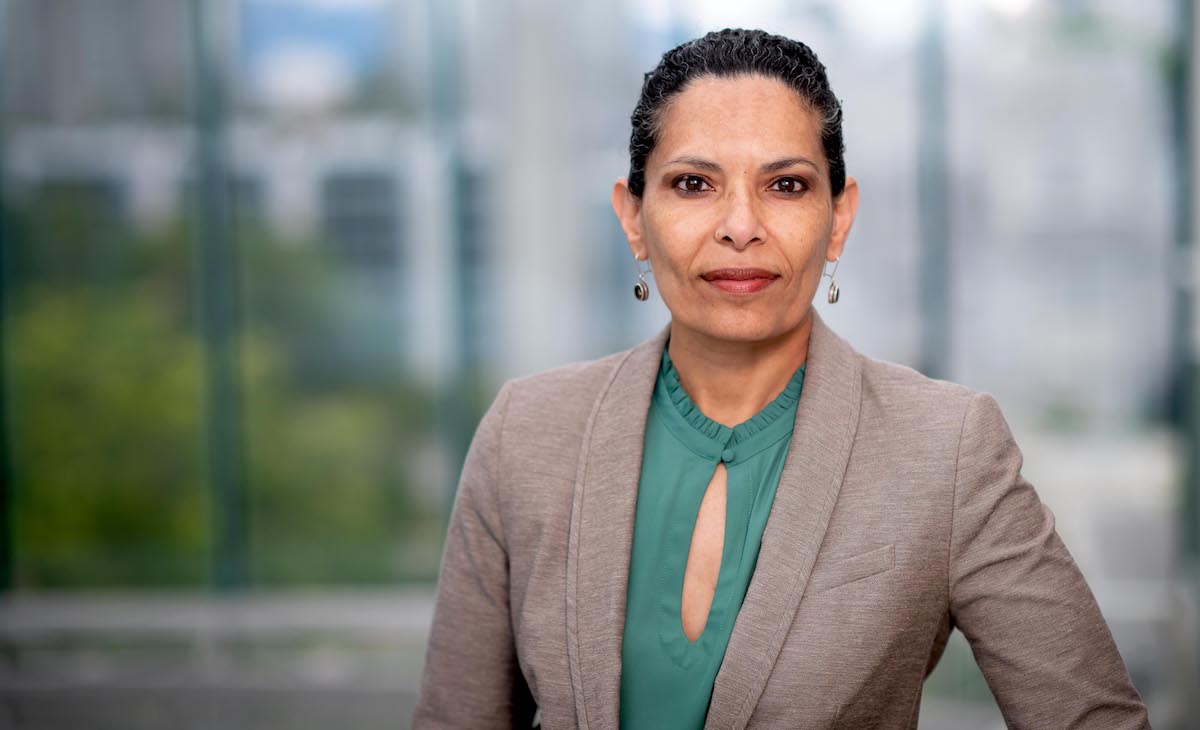
Arig al Shaibah, Ph.D.
Associate Vice-President, Equity & Inclusion
Annual report highlights EIO efforts to advance inclusion
With increased university-wide engagement around equity, diversity, and inclusion (EDI), the Equity & Inclusion Office (EIO) continued to respond to high levels of requests for advising and consultation and operate as a backbone for the implementation of the Inclusion Action Plan (IAP).
The EIO released its 2021-2022 annual report, highlighting the office’s contributions towards the advancement of university’s commitments to equity, diversity and inclusion (EDI), the implementation of the Inclusion Action Plan (IAP), and obligations under Policy SC7: Discrimination. The report presents an integrated overview of efforts across both UBC Vancouver and UBC Okanagan.
This year’s report tracks EIO’s efforts in advancing the goals of the IAP: 1) recruitment, retention and success, 2) systems change, 3) capacity building, 4) learning, research and engagement, and 5) accountability. The report also provides an overview of human rights advising services and a summary of issues and concerns raised. For context, the report includes an overview of the office, an environmental assessment of factors that shaped EIO’s work, and calls to action and next steps that outline future areas of focus, both for the EIO and the institution.
The following is a brief snapshot of key achievements reported for the March 2021 – April 2022 period. During this reporting period, the EIO:
System Change
- Continued to act as a mainstay organization for the implementation of the IAP, by coordinating communications and engagement of university partners, developing implementation structures and processes, roles and tools, and facilitating a Collective Impact [external link] approach to the work. The EIO engaged 24 Inclusion Action Leads across 13 faculties or portfolios, launching five Action Planning Teams, and growing a 150 member EDI Action Network. The EIO further supported over eight units with their efforts to begin unit-level implementation of the IAP.
- Contributed to institutional supports for the Anti-racism and Inclusive Excellence Task Force and resulting recommendations, and the coordinated the Trans, Two-Spirt and Gender Diversity Task Force and the Religious, Spiritual, and Cultural (RSC) Accommodation working group.
Capacity Building
- Received over 338 consultation requests from over 50 units across over 21 portfolios or Faculties. Requests primarily related to educational engagements, but also included requests for strategic and implementation level support for EDI efforts. While many requests started as requests for workshops, they required a more complex and deeper engagement in order to adequately build capacity and/or facilitate systemic and cultural changes.
Accountability
- Human Rights advising team responded to 1,104 concerns related to protected characteristics, in addition to reviewing all requests for support that did not meet the minimum threshold for consideration under Policy SC7: Discrimination.
- With partners, integrated the Employment Equity Survey into Workday to enhance data collection and analysis of employment equity data, and co-initiated a project that seeks to enhance the collection of student demographic data. The student data project aims to fill an identified gap in university-wide student data related to demographics.
Learning, Research, and Engagement
- Provided Faculty and unit-level educational and training sessions and general consultations around efforts to build inclusion, support conflict engagement, and develop anti- racism practices. Work involved the creation of online courses, curation and sharing of resources, and delivery of workshops for leadership and heads of units, teaching assistants, and generally to students, faculty and staff. A new Justice, Equity, Decolonization, Inclusion and Indigenization (JEDII) STEM Series engaged some 536 total unique registrants across 70 plus different units.
- Delivered communication and engagement activities designed to raise awareness and inspire involvement of UBC community members with significant days and timely themes and issues, including activations around International Women’s Day, Black History Month, Pride, Queer Orientation, and Positive Space, Trans Days of Remembrance and Visibility, and in support of Orange Shirt Day.
- Worked to advance EDI in research, with a focused engagement around the Canada Research Chairs (CRC) Equity, Diversity and Inclusion (EDI) Action Plan, CRC hiring processes, research on CRC experiences, and UBC’s pilot participation in the federal EDI Dimensions program.
- Provided some $94,350 in funding for 25 faculty and staff led initiatives across both campuses through the Equity Enhancement Fund.
- Launched a pilot of a low-barrier fund to support student engagement, the Inclusive Initiatives Fund, and disbursed $45,000 for student-led projects. Contributed $50,000 to the UBC Community Engagement-led Partnership Recognition Fund, shifting the focus of the fund to support EDI- related collaborations with external partners and of wider community benefit.
Recruitment, Retention and Success
- Working with partners, administered and analyzed results of the CRC applicant pool equity survey to support the 2019 Restricted and Preferential Hiring Special Program [external link] from the Office of the BC Human Rights Commissioner. Linked to this, the EIO issued research reports aimed at addressing underrepresentation of persons with disabilities and creating more equitable experiences for current and future chairholders at UBC.
- Supported inclusive and equitable search and hiring processes in over eight units across six Faculties and portfolios, including through education and consultation related to job descriptions, recruitment practices, survey design and data collection, and human rights considerations related to the search process, and sharing of tools and resources.
- Continued efforts to support retention and wellbeing of students, faculty and staff from equity-deserving group including through engagements to support connection and sense of belonging through affinity spaces and other engagements, including: Indigenous, Black, and People of Color (IBPOC), 2SLGBTQIA+, and people with disabilities.
Looking ahead
The 2021–2022 reporting year represented another year of increased level of engagement with EDI across the university, correlating with increased demand from Faculties and units for support from the EIO. As a result, the EIO continued to respond to high levels of requests for human rights and conflict engagement advising, education and training, and planning and evaluation.
Looking ahead, the EIO team identified the following recommendations and priorities:
- ensuring appropriate levels of resourcing at EIO and institutional levels to adequately support the implementation of inclusion, the IAP, and policies;
- enhancing EDI data with a primary focus on student data and Faculty and unit-level data sharing;
- building understanding of restorative and proactive approaches to human rights work, d) building more coordination amongst EDI/JEDII partners;
- expanding educational efforts;
- supporting EDI in research, and
- enhancing the operations and understanding of the EIO.
For further details and a comprehensive overview of this year’s operating context, activities, and calls to action and next steps, read the complete EIO 2021-2022 Annual Report.
About inclusion at UBC
Sustained excellence in research, education and engagement depends on the integration of diverse perspectives and approaches. Education is an enabler of social development and mobility, and UBC is intent on advancing the inclusion of all those who have been excluded based on gender, race, religion, sexuality, age, physical ability or economic circumstances.
At UBC, diversity is regarded as a key strength of the institution and is fundamental to achieving excellence in teaching and learning, research and service.
Inclusion is a commitment to access, success and representation of historically underserved, marginalized or excluded populations. As a public institution, UBC has the responsibility to ensure inclusion across students, faculty, staff and alumni, and through all external interactions.
The Inclusion Action Plan is the university’s guiding framework to operationalize this commitment. Inclusion is built by individual and institutional responsibility through continuous engagement with diversity to inspire people, ideas, and actions for a better world.
Inclusion Action Plan implementation underway university-wide: report
Inaugural Inclusion Action Plan (IAP) annual report provides an overview of structures to operationalize the plan and highlights efforts across institutional, Faculty, and unit levels.
The first in what is intended to be an annual update on the implementation of the IAP, the 2021-2022 report provides an overview of the structures designed to support the operationalization of the plan and of activities at institutional, Faculty, and unit-levels by the five goals: 1) recruitment, retention and success, 2) systems change, 3) capacity building, 4) learning, research and engagement, and 5) accountability.
Over the past year, the Equity & Inclusion Office (EIO) has been working with institutional partners to provide the foundational support to operationalize the IAP. Using Collective Impact (external link) as the approach towards engagement and implementation, the EIO executed efforts to coordinate the work across three levels of the University: institutional, Faculty, and unit/ department.
The report is structured to provide a high-level overview and updates on the current context, structures, tools and resources to advance implementation, and describes a sampling of activities already underway that correspond to each goal and level (institutional, Faculty, and unit).
The following are some of the updates in the report:
Launched Action Planning Teams
- In 2021-2022, EIO launched five Action Planning Teams: 1) students, 2) faculty, 3) staff, 4) external contractors, and 5) institutional decision-making. Action Planning Teams are responsible for developing work plans to realize prioritized IAP actions at the institutional level.
- APTs are currently engaged in work planning to advance priority actions related to Recruitment, Retention, and Success, Systems Change, Capacity Building, and Learning, Research & Engagement.
Convened Inclusion Action Leads Community of Practice
- In 2021-2022, the EIO launched a Community of Practice for 24 Inclusion Action Leads and engaged faculty and administrative leadership across 13 Faculties in knowledge and practice sharing.
- The CoP provides opportunities for IA Leads to broaden the understanding of IAP efforts and resources across UBC, exchange knowledge, experiences, challenges, and ideas, and to find support and celebrate successes.
Cultivated EDI Action Network
- The EIO convened an Equity, Diversity, and Inclusion (EDI) Action Network to facilitate learning among the growing community of 150 students, faculty and staff deeply engaged in EDI work across the university.
- The network gathers twice a year for half-day engagements while a Microsoft Teams channel provides network participants with an opportunity to connect between meetings.
Launched a series of tools to support IAP implementation
- The EIO launched a suite of 13 inclusion activation tools and refined a funding program to support units with development and implementation of EDI action plans, strategies, and initiatives.
- The toolkit covers topics such as: building a team to undertake planning; creating an EDI committee; understanding one’s current operational and EDI contexts; finding the right data and information to support decision making; prioritizing what areas to address; tracking progress; and learning from and evaluating one’s efforts. The flagship tool in the toolkit is the Inclusion Self-Assessment Tool (ISAT).
University-wide efforts
- University-wide efforts are unfolding across each goal area including for example: strategies and programs to improve representation of diverse students and faculty, changes to UBC application systems, initiatives to increase the level of EDI understanding and capacity amongst lecturers, teaching fellows, and managers, enhanced supports for employees with disabilities, efforts to remove systemic barriers in research, and improvements to collection of demographic data from students, faculty, and staff.
Looking ahead
As the EIO looks to the future, our efforts are expected to focus on enhancing communications, identifying options to address resource constraints, pursuing alignment with other institutional plans and commitments, and developing an evaluation approach to inform learning and assess impact.
For a more detailed and comprehensive overview of implementation structures and activities, university-wide activities, and next steps and considerations, read the full Inclusion Action Plan: 2021-2022 Annual Report.
About inclusion at UBC
Sustained excellence in research, education and engagement depends on the integration of diverse perspectives and approaches. Education is an enabler of social development and mobility, and UBC is intent on advancing the inclusion of all those who have been excluded based on gender, race, religion, sexuality, age, physical ability or economic circumstances.
At UBC, diversity is regarded as a key strength of the institution and is fundamental to achieving excellence in teaching and learning, research and service.
Inclusion is a commitment to access, success and representation of historically underserved, marginalized or excluded populations. As a public institution, UBC has the responsibility to ensure inclusion across students, faculty, staff and alumni, and through all external interactions.
The Inclusion Action Plan is the university’s guiding framework to operationalize this commitment. Inclusion is built by individual and institutional responsibility through continuous engagement with diversity to inspire people, ideas, and actions for a better world.
New course to support inclusion of sexual and gender diversity

On the 20-year anniversary of Positive Space at UBC, the new Positive Space: Foundations online course is now available to students, faculty, and staff.
The self-guided course, available through the Workplace Learning Ecosystem, provides a low-barrier access for UBC community members to learn about sex, sexuality and gender diversity, and ways to learn about and demonstrate allyship for building a more inclusive UBC.
“The course is designed to help UBC meet its commitments to non-discrimination, embedding a deeper understanding of 2SLGBTQIA+ subjectivities in the broader UBC community” says Kaitlyn Kraatz, Gender Equity Specialist with the UBC Equity & Inclusion Office (EIO) and interim coordinator of the Trans, Two-Spirit, and Gender Diversity Task Force, who contributed to the course development.
Specifically, learners will be better positioned to differentiate between sex, gender, and sexuality, examine how binary understanding of gender works as a tool of colonization, how assumptions, stereotypes and normative frameworks construct everyday life and create barriers to inclusion, and learn terms and labels used by the 2SLGBTQIA+ community.
“As we evolved our understandings of more intersectional and anti-oppression considerations, we updated the curriculum to ensure our UBC community has access to the most up-to-date content,” says Rachael Sullivan, Equity Education Strategist with the EIO, and one of the course designers and educators.
The end goal is that learners become confident with and capable of exercising inclusive practices and supporting behaviour change. This could include pronoun and name use, or exploring how they can improve team belonging, cohesion, and collaboration through additional inclusive practices and processes.
“Often, we have employees or students saying they want be an ally, be more inclusive, but are afraid to make mistakes or are not sure where to turn for information and advice. Some want to be more informed about history and context, or for example, they are not sure what to do if they unintentionally misgender someone – how do they apologize?”
While Positive Space training used to be delivered only through regular in-person workshops, course participants can complete the now asynchronous course on their own time and are encouraged to revisit the course as an on-demand resource. Following the completion of the course, participants are also able to sign up for a complementary synchronous workshop held periodically by staff from the EIO.
“We designed the course to offer a safe, flexible learning mode that accommodates diverse learning styles, answers questions – even awkward ones, and enables participants to take quizzes privately and practice as often needed.”
The course is part of a broader effort to make UBC more inclusive of 2SLGBTQIA+ community and provides a range of benefits to all UBC community members, particularly those seeking to engage in allyship and lateral allyship.
“Participants will be able to take away practices and understandings that they can immediately exercise at the individual level, but also that they can start implementing at a group, club, team or departmental or unit level.”
UBC community members can take the course through the Workplace Learning Ecosystem.
Student editors reflect on launching an EDI magazine
RESPECT magazine has been developed by students for students with support from faculty members Anita Chaudhuri and Rishma Chooniedass. Funded through the Equity Enhancement Fund, the magazine seeks an alternative way to publish different student points of view on equity, diversity, and inclusion (EDI) and to develop a respectful and safe environment at UBC Okanagan.
We connected with the student editorial team to explore their perspectives, learnings, and insights from this project.
What does RESPECT stand for?
Like an acrostic poem, RESPECT stands for Representation and Equity in Systemic Practices to Effect Change Today. In simpler words, it represents our desire to give students a space where they feel comfortable sharing their personal experiences in the context of EDI. This allows for students to learn about their peer’s experiences and thus work together to create a more equitable community. All of this is on the basis of our team’s core value: Respect.
What inspired you to launch this project?
UBC has a diverse student population coming from a variety of different backgrounds, as exemplified in our own team consisting of three students all from different parts of the world. These different backgrounds yield a variety of personal experiences which can serve as learning opportunities when shared with the community. We noticed a lack of space for students to creatively share their experiences and were keen to fill that gap through the creation of this magazine.

Individuals are unique, our backgrounds are different, and our perspective on the world is different. In my opinion, equity allows everyone to have equal opportunity to access resources and to be treated fair through procedures by the system. Inclusion is an outcome that ensures diverse individuals feel welcomed and can participate in the community.
Nancy Lu, Peer Review Editor

As a child of a refugee, I have heard of and experienced many forms of discrimination which can have profound effects on an individual’s wellbeing. To me, equity and inclusion is an ongoing effort to modify and reconfigure established systems and policies in order to create a community where all individuals feel valued and respected.
Élise Machado, Submissions and Productions Editor

In a place such as UBC, where diversity can be found at every step one takes, it is very important to recognize it and understand that every single one of us is different; and even more important, that these differences are what makes us exceptional.
Ximena Cayo Barrantes, Marketing and Social Media Manager
Who do you hope to primarily engage through RESPECT?
RESPECT is a student-led, student-facing magazine, accessible to those who wish for a space where they can express themselves and delve into the wonder that is diversity in our community.
What did you learn through the process of working on this project?
We started working on the magazine virtually due to the COVID-19 pandemic but were able to stay on track by setting the same goals and reminding each other of our mission. Establishing an online magazine is a new experience for our entire team, but we quickly learned that it is a very collaborative process and that effective teamwork and intentional networking would allow us to be successful.
What surprised you the most through the process of publishing this magazine?
As a new startup, we were very impressed by the student response as well as their desire to participate in any way possible, be it as creators or even volunteer editors. It was also quite impressive to see the amazing quality of the submissions we received. The dedication was palpable in each and every one of the pieces and we thoroughly enjoyed reading the submissions.
How has the publication been received so far?
During our UBC Celebrate Learning Week presentation, we received positive feedback about our project as well as innovative ideas for future steps. The first edition was released at the beginning of June and we will be receiving input from contributors in the form of a survey in early August. We are looking forward to hearing back from them and using their feedback to fine-tune our submission process.
What’s next?
As we gear up for our second issue in fall of 2022, we are very interested in increasing student engagement with submissions and the editorial process. The topic for our second issue is “Practicing Equity” which focuses on practicing, promoting, and creating opportunities to enhance equity and we are keen to get individual as well as collaborative group submissions. Please do not hesitate to reach out to our team via email (respect.magazine@ubc.ca), visit our website (https://blogs.ubc.ca/respectmagazine/), or follow us on Instagram (@ubc_respect_magazine) for more information on how to get involved.
August 1st is Emancipation Day

On August 1, we invite the UBC community to join in the recognition and celebration of Emancipation Day in Canada.
Overview
Unanimously designated as Emancipation Day by the House of Commons in 2021, this day marks the enactment of the Slavery Abolition Act of 1833 on August 1, 1834 across the British Empire. However, most enslaved peoples in Canada did not achieve full emancipation until later as those six year old and over were required to continue serving without pay for additional four to six years as means of “compensation” to slave owners.
This day provides an opportunity to celebrate the strength, courage, and perseverance of people of African descent in Canada, recognize their struggles to end enslavement, and acknowledge their contributions towards Canadian society.
Following the House of Commons, the City of Vancouver and BC Government officially proclaimed August 1 as Emancipation Day. The United Nations proclaimed 2015-2024 the International Decade for People of African Descent (IDPAD), “citing the need to strengthen national, regional and international cooperation in relation to the full enjoyment of economic, social, cultural, civil and political rights by people of African descent, and their full and equal participation in all aspects of society.” The UN identified the following themes of focus: recognition, justice and development.
Why It Matters
Many remain unaware that Canada’s colonial foundations were shaped by anti-Black and anti-Indigenous discrimination, which sought to subjugate and segregate Black and Indigenous peoples. Many also remain unaware that Black and Indigenous peoples were once enslaved across the country. And, while slavery has been abolished, the systemic effects and legacies of subjugation, segregation, and slavery continue to reverberate today.
Learning about and acknowledging historical and contemporary forms of racism and racial discrimination are the first steps in working to redress and reparation.
What You Can Do
Efforts to mark Emancipation Day across Canada create opportunities to learn about and reflect on the history and impacts of colonialism, segregation, and slavery on Black peoples in Canada, and, more importantly, to recommit to actions to address ongoing systemic anti-Black racism.
At UBC, Anti-Racism and Inclusive Excellence Task Force Report recommendations highlight several strategic actions to support university’s commitments to meaningfully address anti-Black racism and support Black excellence and flourishing.
On this day, we invite members of the UBC community to renew your commitments to learning, reflection, and action so that collectively we can combat anti-Black racism.
Explore history and perspectives
- Emancipation Day – August 1, Government of Canada
- “Enslaved” reading list, CBC
- Black advocates hope B.C.’s proclamation of Emancipation Day sparks change, CBC
- To understand B.C.’s Black history, connect past and present in Canada, Beyond UBC
- Debunk: Myths about History of Black People in B.C, UBC Equity & Inclusion Office
Take Action
- Activating Solidarity: A Guide to Anti-Racism Work
- Solidarity & Action: Five Tips on Tackling Racism
Celebrate
- Celebrate Emancipation Day with some of Canada’s leading Black creators and BIPOC culture makers, CBC
Access resources
Photo attribution: Government of Canada
A new student-run EDI magazine, RESPECT, launched at UBC Okanagan
RESPECT has been developed by students for students with support from faculty members Anita Chaudhuri and Rishma Chooniedass. The magazine is funded through the Equity Enhancement Fund, and the magazine seeks an alternative way to publish different points of view on EDI from the UBC student community to develop a respectful and safe environment.
We connected with Chaudhuri and Chooniedass to hear more about this project and how it supports student engagement and learning related to EDI. Stay tuned for perspectives from students involved in the project in the next edition.
Anita Chaudhuri, Assistant Professor of Teaching (English, English and Cultural Studies) at UBCO, is a principal applicant of the project supported by Equity Enhancement Fund. Rishma Chooniedass, Assistant Professor of Teaching (School of Nursing) at UBCO, is a collaborator of the project supported by the Equity Enhancement Fund.

Rishma Chooniedass

Anita Chaudhuri
What inspired or motivated you to launch this project specifically?
Teaching online over the past two years highlighted the importance of equity, the need to address diversity (of places, people, expectations, learning goals), and importance of inclusive and accessible learning opportunities. Also, we missed our social interaction, knowing students beyond a textbook. This project, therefore, emerged from the need to have more conversations with students beyond a classroom and on a topic that is impactful. Our campus has organized talks on EDI and offers courses that discuss the topic, but we did not find a space where students could reflect and share, for instance, their observations, class projects or a story, with the community. The RESPECT magazine hopes to fill that gap.
What does equity, inclusion mean to you? Where did your interest in equity, inclusion emerge from originally/why is it important to you?
According to Chaudhuri, “EDI is about recognizing and being comfortable with difference, asking questions, and standing up for oneself and others. I work in the area of Communications and Rhetoric and I am interested in how culture plays an important role in writing composition and extends to equity-related work. Culture as a term is very difficult to pin down and varied cultural knowledge, in my experience, makes for richer conversations that lead to inclusive practices. My understanding has evolved from working with students from multiple academic disciplines and geographical locations. They have generously shared different ways of learning and socio-cultural experience.” For Chooniedass, “EDI means that everyone is respected and treated fairly. Only when people feel psychologically safe and comfortable in their environment, they can be their authentic selves. We are continuously learning from each other. Equity means that everyone’s contributions are heard and valued.”
Why a magazine as a medium?
We used the term quasi-academic to identify the mode and medium of production. We wanted to accept multimodal submissions to showcase students’ creativity. Using this electronic platform, we hope to improve virtual communication and collaboration to build community. We also wanted to make the space inclusive, student-led, student-focused, and vibrant in its engagement with the UBC student community.
What did you learn through the process of working on the magazine? What surprised you the most?
We are excited about publishing the inaugural Issue of RESPECT. The process of engaging with the contributors has been an important learning opportunity. We are beginning to understand the kind of support contributors may need to develop submissions and trying to facilitate the planning and submission process. We are not surprised, but impressed by the very different approaches to understanding and defining equity from UBC students.
Students played an important role in bringing this to life. How do you see this project supporting their learning and growth?
This project is an example of “transformative learning” at UBC. Strategy 14 of UBC’s Strategic Plan proposes the development of “academic structures that foster and support opportunities for students from different perspectives and disciplines to work together on complex or emergent problems” and the magazine is an avenue to share with the community and further such interdisciplinary engagement.
What’s coming up next, magazine wise or otherwise?
Issue 2 is coming up next. Our undergraduate coordinators will be connecting with the UBC community and student organizations to invite contributions about practicing equity. We hope to make this project sustainable and plan to hold conversations to continue funding this important platform.
What advice would you give to someone who wants to advance equity and inclusion?
It is an important area and much work needs to be accomplished to ensure that everyone in our community feels supported. Be proactive. Don’t wait for others to tell you to do the right thing. We can all be equity leaders!
Any reading recommendations for the summer?
RESPECT Issue 2 invites contributions on how we practice, promote and create opportunities to enhance equity.
If you are a student and would like to contribute to RESPECT magazine, check out the submission guidelines.
Submission deadline: 31 October 2022