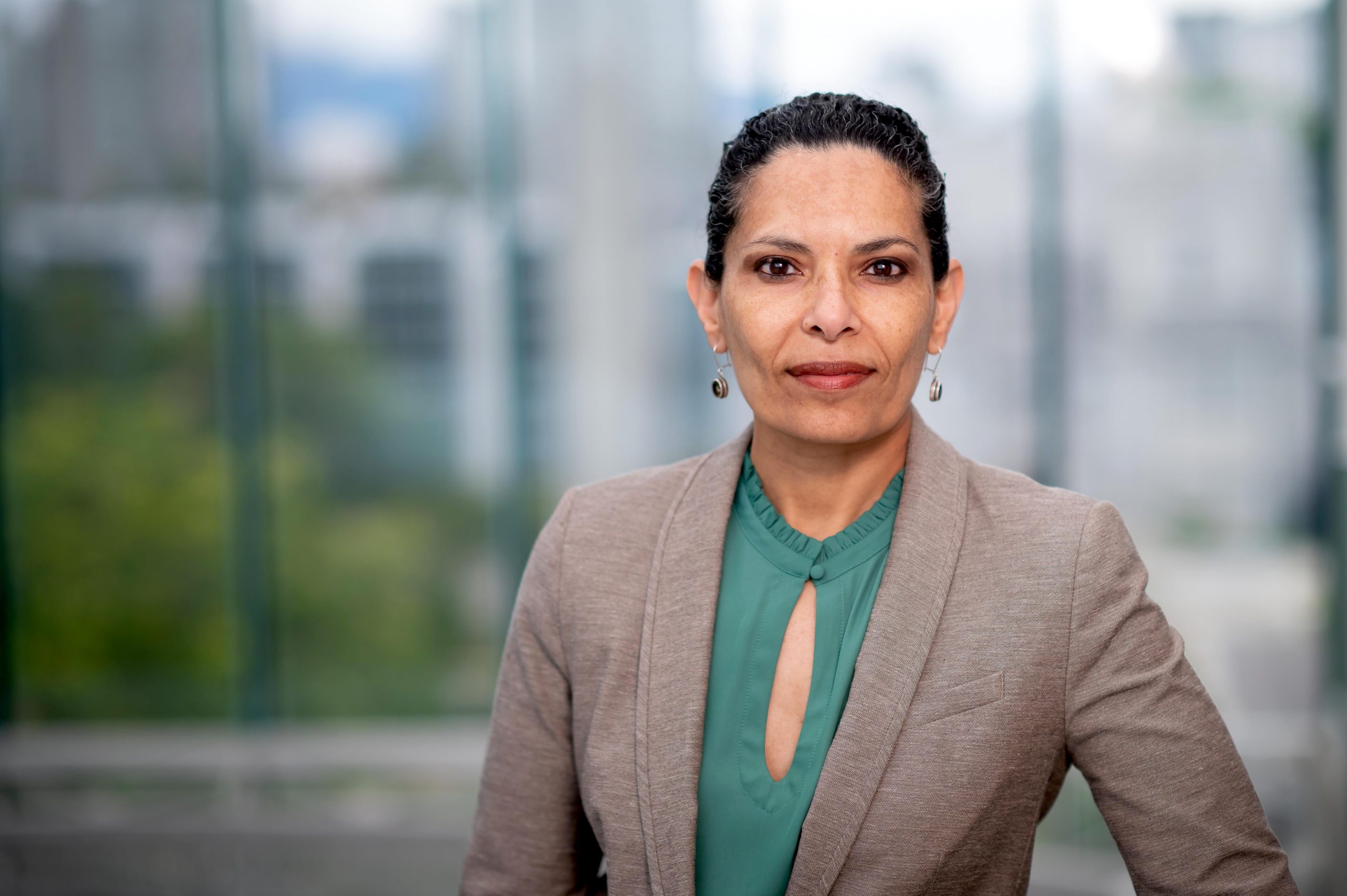
Rachael E. Sullivan, PhD

Rachael E. Sullivan, PhD

Senior Education Consultant

Campus:
UBC Vancouver
Pronouns:
She, her, hers

Bio

Rachael (she/her) lives, learns and works as a white cisgender queer settler on the shared unceded/stolen lands of the xʷməθkwəy̓əm (Musqueam), Skwxwú7mesh (Squamish) and səl̓ílwətaʔɬ (Tsleil-Waututh), colonially known as East Vancouver. Rachael joined the UBC Equity and Inclusion Office in 2014 and currently works to develop inclusive educational workshops, helps to facilitate campus-wide engagements, including the Inclusive Washroom Project, Conflict Theatre, and most recently led the development of the Positive Space: Foundations online course. As a long standing member of the Equity & Inclusion Office, Rachael continues to work collaboratively to unsettle oppressive systems and create meaningful change that supports inclusion and belonging for all who work, live and learn at UBC.

Phone:
604–827–2228

Email:
rachael.sullivan@ubc.ca

Address:
Brock Hall
1874 East Mall
Vancouver, BC V6T1Z1

Jenica Frisque, MA, MSc (on leave)

Equity Education Strategist

Campus:
UBC Okanagan

Pronouns:
She, her, hers

Bio

Jenica Frisque is passionate about fostering inclusion at UBC Okanagan through the delivery and facilitation of programs, and conversations that raise awareness of and embed the values of equity, diversity, intercultural understanding and mutual respect in the fabric of the campus and the wider community. Beyond her education credentials, which include an MSc in international development from Lund University and an MA in sociology from Malmo University in Sweden, Jenica has travelled extensively and worked in the diversity and gender equity fields in Latin America, Canada and Sweden.

Phone:
250–807–9291

Email:
jenica.frisque@ubc.ca

Address:
University Centre 216
3272 University Way
Kelowna, BC V1V 1V7

The National Day of Remembrance and Action on Violence against Women

Statement of solidarity in response to Club Q attack

We are deeply saddened by the violence and loss of life in Colorado Springs, United States. In memory of the victims and in solidarity with queer and trans communities impacted by this tragedy, we stand behind the thoughtful and powerful message issued by Sexuality and Gender Inclusive Education UBC (SOGI UBC).

The statement provides a reflection on this tragedy in the broader context of ongoing and persistent violence against queer and trans community members, and provides links to resources and supports.

To our 2SLGBTQIA+ community: you are not alone. If you are feeling impacted, traumatized, and/or overwhelmed by this recent event, resources and supports are available.

SOGI UBC Statement on Colorado Springs 

Related event

In care and community: 2SLGBTQIA+ student space 

The Pride Resource Centre and Positive Space Committee invites 2SLGBTQIA+ students at UBC Okanagan to an open space for care and community. Join this space for solidarity and support.

Date and time: November 29, 10:00am-12:00pm
Location:  UNC132

Community resources

Students

Additionally, students may wish to find community through:

Faculty and Staff 

Faculty and staff may wish to find community by joining the following group(s). Click on each to email the group and find out more.

Time to Thrive: UBC Black Caucus brings back Black mental wellness initiative

“I didn’t know how much I was holding in from the overwhelming grief of all the people I have lost to the pandemic and the racialized violence happening at home until I had the opportunity to talk to a therapist who truly understood. The experience has been life changing.”

–  UBC student on the impact of the Black Mental Wellness Project

Everyone has a right to mental health. But not everyone has access to mental health services. Longer wait times, geographical and financial obstacles, and a lack of access to Black counsellors are just a few of the barriers that Black community members face. Barriers that have repeatedly been surfaced by Black students, faculty and staff at UBC.

In response, the UBC Black Caucus, supported through the IBPOC Connections: Faculty and Staff program and the Equity Enhancement Fund from the Equity & Inclusion Office, is bringing back the Black Mental Wellness Project to center the needs of Black community members and address barriers to accessing mental health supports.

Piloted in 2021, the project provides Black UBC community members with free access to Black counsellors. Within two weeks of the program first launching, fifty-one hours of counselling sessions had been booked, reinforcing a very clear need for increased access to Black counsellors.

“This was an amazing project, and I do hope UBC continues to do it as there is a need.”

–  Participating counsellor

Back again in 2022, for the month of November – and on a first-come, first-served basis – Black students, faculty and staff across the Vancouver and Okanagan campuses can access free 1-on-1 virtual or in-person counselling sessions with Black counsellors.

Visit the UBC Black Caucus website to get counsellor details and to book an appointment.

“I had been looking for a Black therapist for a while now, and I am ever so grateful that you found these therapists for us at a time when they were desperately needed.”

–  UBC faculty member

“I really appreciated having a list of black counsellors and a short bio/description. This was my first time trying out counselling a one of the big reasons I hadn’t was because I didn’t know how to access a Black therapist. Thank you for putting this together and I hope this is something that continues.”

–  UBC staff member

“[…] through the UBC Black Caucus Black Mental Wellness Pilot Project, I was able to have a session with a Black, immigrant woman and honestly one session has already been so beneficial.””

–  UBC student

Did you know

Based on the results of a survey of Black Canadians conducted by the Mental Health Commission of Canada:

  • 60% said they would be more willing to use mental health services if the mental health professional were Black
  • 35% were experiencing significant psychological distress, 34% of whom never sought mental health services
  • 95% felt that the underutilization of mental health services by Black Canadian residents was an issue that needed to be addressed.

—–

November 1-30 is Thrive. Learn about, talk about, and explore ways to support your mental health.


Sahir Moosvi, MDS

Data Analyst

Campus: UBC Vancouver

Pronouns: he, him, his

Bio

Sahir supports the development of projects expanding the use of EDI data to support insitutional initiatives as a member of both the Equity & Inclusion Office (EIO) and the Planning and Institutional Research Office (PAIR). Sahir completed his Bachelor of Science (Hons) in biochemistry at the University of British Columbia with his thesis on central nervous system regeneration after injury. Following this Sahir completed his Masters of Data Science at the University of British Columbia. Sahir has also worked extensively with youth to develop their understanding of complex sociopolitical topics as well as giving talks and workshops to law enforcement and schools on racioethnic sensitivity.

Email: sahir.moosvi@ubc.ca 

Michael Fang

Data Analyst

Campus: UBC Vancouver

Pronouns: he, him, his

Bio

Michael’s expertise lies in the realm of empowering data-driven decision making. With years of dedicated service in the institutional research field, he has taken on diverse roles as an institutional research analyst, learning data analyst, and wellbeing data analyst. Michael is eager to contribute his skills and support colleagues at EIO and UBC.

Email: michael.fang@ubc.ca 


$49,510 awarded to community-based initiatives that enhance equity, diversity, and inclusion

Fourteen projects led by faculty and staff at UBC Vancouver and UBC Okanagan were awarded funding from the Equity Enhancement Fund. These projects support UBC’s commitments to inclusion as identified in UBC’s strategic plan and the Inclusion Action Plan.

This year, the Equity & Inclusion Office received 59 applications asking for a total of $245,245 in requested funding. Each cycle, $40,000 is available at UBC Vancouver and $5,000 is available at UBC Okanagan. An evaluation committee, convened by the Equity & Inclusion Office, assessed each of the applications. Approximately 20 per cent of the total requested funding was awarded to 14 projects (24 per cent of total number of projects submitted).

$42,900 awarded to nine projects at UBC Vancouver

Projects awarded the combined funding of $42,900 this year all seek to enhance equity and inclusion across the university including in academic programs, recruitment and progress metrics, student services and experiences and with an aim to enhance the experiences of Indigenous, people of colour, persons with disabilities and queer and trans communities at UBC.

Projects funded included:

  • Foundations to assess and enhance EDI: preparing to surf the data wave, Faculty of Science
  • UBC ARTIVISM: Minding The Body, UBC Arts & Culture District, Office of the Dean of Arts
  • Inclusive Publishing: Increasing Accessibility of BC Studies, Office of the Vice-President, Students
  • Transdisciplinary Day of Disability Research, Education, and Activism, Department of Asian Studies, Faculty of Arts
  • IBPOC Connections for Students, Health Equity, Promotion and Education in Student Health and Wellbeing
  • Diversifying Access to UBC Health Profession Educational Programs, Department of Occupational Science and Occupational Therapy, Faculty of Medicine
  • Expanding Staff Capacity, From Recruitment to Professional Development – Office of the Vice-President, Students
  • Student Staff – EDI Initiatives, Department of Athletics & Recreation
  • Mentorship to promote diversity in the graduate pipeline, Department of Psychology, Faculty of Arts

$6,610 awarded to five projects at UBC Okanagan

This year’s projects and initiatives and UBC Okanagan focus on diverse areas – Indigeneity, race and culture, and social programs – and support education, community engagement and development.

  • IDEA Orientations – Physical indigenization of space and increasing knowledge and awareness of indigenous communities during JumpStart, Student Experience Office
  • Indigenous Programs and Services and Harm Reduction: A Collaborative, Capacity Building Initiative, Campus Wellness and Education Unit
  • Indigenous Reads Book Club, UBC Okanagan Library
  • EDI Book Club, College of Graduate Studies
  • UBCO Heat Pride Night, Athletics & Recreation

You can learn more about each of the projects funded, as well as previously funded projects, in our Recipients database for more information

Interested in applying next year?

Visit our equity.ubc.ca/eef page or sign-up for our newsletter to learn about upcoming funding cycles and calls for application.

The fund supports initiatives that help advance UBC’s strategic commitment to inclusion, facilitate collaboration and innovation, and build a diverse campus culture.

New Pride Flags Resource

Centering care and supporting community-led affinity spaces in response to global events: A message from the AVP

On September 27, a university statement was posted to express concern for the situation in Iran emerging after the death of Mahsa Amini, and to acknowledge the courage of those standing up for human rights and freedoms. As the situation unfolds, and thousands of change agents and allies continue to gather in Iran, in Canada, and around the world, it is clear that the impacts on the Iranian diaspora and international scholars and learners at UBC will be protracted and profound.

In addition to a symbolic statement of support from the institution, there is much we can do as individual colleagues and as a collective community to demonstrate substantive actions in support of members of impacted communities. In particular, unit/people managers and academic instructors are encouraged to review the Equity & Inclusion Office’s Guidelines for responding to collective tragedies and hateful incidents, which center an ethics of care. An ethics of care invites us to exhibit compassion towards and afford flexibility for impacted students, faculty, and staff in the classroom and the workplace in the aftermath of such tragic global events. This guidance document is relevant for other current, ongoing, and future global and local events that profoundly impact the campus community given our rich diversity and our deep value for human rights and freedoms.

Among the ways to make a substantive difference to the experiences of impacted communities is to support community-led affinity spaces. Already, a number of such initiatives have been organized at UBCO to support Iranian communities. In the coming days and weeks, the UBC Iranian Professionals Network and the UBC Persian Club will be co-leading the curation of an on-site gathering and co-convening other spaces at the Vancouver campus for Iranian students, faculty, and staff. The goal is to offer safe spaces for connection, to give and receive community support, and to counteract feelings of isolation and helplessness. The Equity & Inclusion Office is pleased to assist in raising awareness for and helping to support this community-led initiative. More information about the gatherings will be forthcoming.

Finally, to promote respect and inclusion, it is important to recognize that the UBC Iranian community is diverse, including across ethnic and religious identity. Among those who identify as Muslim, there is a diversity of ways that individuals may choose to present and practice their Islamic faith, spirituality, or cultural identities. None of these should be implicitly conflated with support for the Iranian government’s regime, including a community member’s right and choice to wear hijab. More broadly, building one’s cultural competency and global literacy can enhance intergroup relations in the aftermath of these events. Community members are encouraged to broaden their sources of information and to take the initiative to learn about the relevant social, political, and historical contexts surrounding such global events. The UBC library is one great resource for such learning.

Sincerely,

Arig al Shaibah, Ph.D.
Associate Vice-President, Equity & Inclusion


“I raise my voice not so I can shout, but so that those without a voice can be heard. We cannot succeed when half of us are held back.” ~ Malala Yousafai


“A world full of empowered women isn’t one where men are marginalized. It’s a world where everyone thrives.” ~ Purnima Mane


Resources for community members seeking support:

Students

Students Assistance Program – a free 24/7 confidential wellness resource for crisis, grief, and trauma counselling:

A variety of health and wellbeing resources, services and programming is also available to UBC Vancouver students at students.ubc.ca/health and to UBC Okanagan students at students.ok.ubc.ca/health-wellness/.

UBC Persian Club – a non-profit student organization and social hub for UBC Iranian community and Iranian-related activities.
Website: facebook.com/ubcpersianclub/
Email: president@ubcpc.com


Faculty and Staff

Employee and Family Assistance Program – a confidential and voluntary resource providing professional and emergency counselling services and additional support via phone, video, web or mobile app.

All mental health resources, including access to UBC’s Extended Health Benefits Plan, can be found on the HR website: hr.ubc.ca/health-and-wellbeing/mental-health.

UBC Iranian Professionals Network
Website: equity-theiranianprofessionalnetwork-2022.sites.olt.ubc.ca


All community members

Healing in Colour has an extensive list of racialized counsellors
Website: healingincolour.com/about