Trans Day of Remembrance: A call to safeguard hard-won freedoms and rights

Trans Day of Remembrance: A call to safeguard hard-won freedoms and rights

People across Canada will be participating in Trans Awareness Week events from November 13-19, which culminates in the recognition of Trans Day of Remembrance (TDOR) on November 20.

This year marks the inaugural year that the transgender flag will be flown in place of the UBC flag from November 13-20 in observance of Transgender Awareness Week from November 13-19 and Transgender Day of Remembrance on November 20. Additionally, the flags will be lowered on Monday, November 20.

TDOR commemorates transgender and non-binary (TGNB) people who have disproportionately lost their lives in hate-motivated crimes. This last year has been very distressing to 2SLGBTQIA+ communities and allies, locally and nationally, as we have seen the surfacing of bigotry and rise in hate-motivated violence targeting 2SLGBTQIA+ citizens.

TDOR is therefore also a call to safeguard hard-won 2SLGBTQIA+ – and particularly TGNB – freedoms and rights and to sustain efforts to further extend these rights and freedoms into all domains of society. Attempts to curtail, if not eliminate, universal and inalienable freedoms and rights to dignity and equality for any members of the citizenry and the UBC community must be rejected. Promoting the rights of one group cannot be done at the expense of the rights of another group.

Sexual orientation, gender identity and gender expression are among the protected characteristics under the BC Human Rights Code. The Equity & Inclusion Office Human Rights Advising team offers confidential advising for any student, faculty or staff who may have concerns or complaints related to discrimination.

Join members of the UBC community in learning more about how you can support trans rights, trans inclusion and trans affirming care, available resources, and forthcoming events at the Vancouver and Okanagan campuses – visit events.ubc.ca/tdor.

Arig al Shaibah, PhD

Associate Vice-President, Equity and Inclusion

“It is absolutely imperative that every human being’s freedom and human rights are respected, all over the world.”

– Jóhanna Sigurðardóttir

Orange Shirt Day: Reflect, learn and act towards Truth and Reconciliation

UBC committed to welcoming community members from around the globe

UBC stands in support of 2SLGBTQIA+ communities

Strategic Equity & Anti-Racism Enhancement Fund

Pride Programming 2023-2024

2023 IBPOC Faculty & Staff Meet & Greet

How Samaya Miller is creating space for Black people on campus
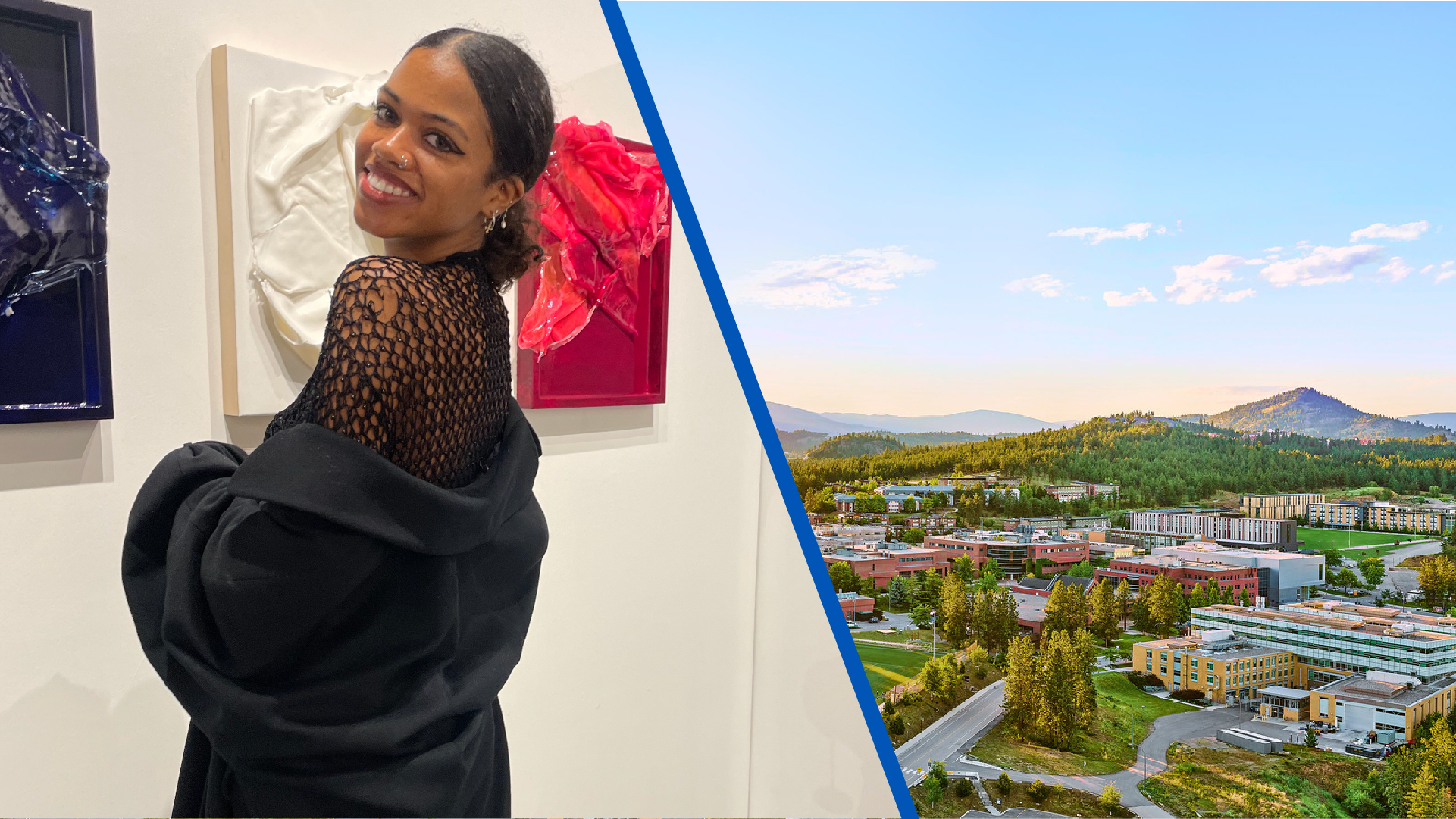
Photo of Samaya Miller next to an image of the UBC Okanagan campus.

Pronouns: She / her

UBC affiliation: Undergraduate student

Campus: UBC Okanagan

Faculty: Arts

Department: International Relations

Involvement:

  • Inclusion Project Assistant, Equity & Inclusion Office
  • Okanagan head, Black Caucus

How have you been involved in advancing equity, diversity and inclusion at UBC?

As a Black person at a predominantly white institution, I’ve experienced the challenges of being the only Black person in a room and feeling a lack of belonging and connection. I knew that if I wanted to find community, I would have to create space for Black people on campus.

In my positions as the Inclusion Project Assistant with the Equity & Inclusion Office and the UBC Okanagan (UBCO) head of the Black Caucus, I had the opportunity to collaborate with different campus partners during Black History Month, including the African Caribbean Social Club (ACSC). My favorite projects were the Black Resource Centre and Black Care Packages.

The Black Resource Centre created space for Black people to come together without fear or worry about racial discrimination. It was a safe place to hang out, study or listen to music. The Black Care Packages project was an especially important initiative during Black History Month – a period of time where most, if not all, Black community members are expected to speak for the whole community. We are expected to put on a brave face and answer every question about our Blackness. In recognition of this emotional burden, we gave Black students an opportunity to prioritize their wellbeing by providing care packages sponsored by Lululemon, Black-owned businesses, and campus partners like the ACSC and Student Experience Office. Although it does not solve the burnout that Black students face, it’s a step in the right direction that I hope can grow each year.


What are your key takeaways from this experience?

As we know that there is more that can be done to support Black community members at UBCO, I’ve always felt a responsibility to try and fill those gaps. As a student and staff member trying to graduate it was a lot of pressure to make sure everyone had their needs met. However, I kept reminding myself that I too need to take breaks and that without self-care the work I do will fall short. From my experience, being burnt out takes a toll on your productivity – it’s better to be healthy and sane.


What advice would you give to someone interested in doing similar work?

I would say to always give yourself grace and that good or bad, every experience and hurdle throughout this work will teach and help mold you into a stronger more informed person. Especially as Black people, we tend to overwork ourselves and neglect our needs to help others. Instead, we must realize how even the “smallest” of things are important and even the “littlest” achievements need to be celebrated. Last of all, have fun. Don’t get so caught up with the work and politics of it that you forget to enjoy your time here at UBC.


What resources helped you navigate your EDI journey?

My colleagues have been my rock. Without their help, I wouldn’t have been able to do so much. It’s truly so amazing to be able to be in community with like-minded people who also want to achieve the same goals. I am thankful that I was able to be involved in the clubs I was in and with the Equity & Inclusion Office because the people I built relationships with truly changed my university experience for the better.


What book, film or podcast would you recommend to others and why?

My favourite book this year was definitely We Have Always Been Here by Samra Habib. It’s a queer Muslim memoir about their experiences growing up, immigrating and discovering their identity – I thought it was so powerful. Also, I loved Frying Plantain by Zalika Reid-Benta. As a Jamaican who grew up in Canada, I found that this book really healed a lot of things I went through by helping me see that I wasn’t alone in my struggles in Canada.

Why Manish Kumar is raising awareness about the caste system

Photo of Manish Kumar next to an image of the UBC Okanagan campus.
Pronouns: He / him UBC affiliation: Graduate student Campus: UBC Okanagan Faculty: Graduate and Postdoctoral Studies Department: Interdisciplinary Graduate Studies Program – Community Engagement, Social Change and Equity Involvement
  • Inclusion Project Assistant, Equity & Inclusion Office
  • Equity Ambassador, Equity & Inclusion Office
  • Graduate Student Community Facilitator, Student Experience Office

How have you been involved in advancing equity, diversity and inclusion at UBC?

My journey with the UBC Okanagan (UBCO) Equity & Inclusion Office (EIO) started with my role as a volunteer Equity Ambassador, which then led to my student employment as an Inclusion Project Assistant. One of my main objectives in connecting with the EIO was to raise awareness at UBCO about the impacts of the Indian caste system. My interest emerged from an experience where I was asked about my caste-based identity at a cultural event organized by Indian students. I was surprised at being asked this question in Canada and specifically at UBC. Due to this experience, and given the growing number of South Asian – and especially Indian – students, staff and faculty members at UBC, I decided to raise awareness of the impacts of the caste system and find ways to get caste included in UBC’s Discrimination Policy (SC7). Since the policy reflects British Columbia’s Human Rights Code, any amendment requires creating a petition and gaining the support of various public and private institutions, agencies and community members – a process that requires time and resources. As a graduate student with competing demands and limited time, I instead focused on creating spaces and opportunities for the UBC community to learn more about and discuss the implications of the Indian caste system in the context of human rights. As a result, I was invited to discuss the caste system at the 2023 Dr. Ambedkar International Symposium on Emancipation – an event hosted on the UBC Vancouver campus and organized by the Chetna Association of Canada and Ambedkarite International Co-Ordination Society. I also engaged with EIO-led events and workshops under the guidance of Jenica Frisque. Jenica deeply influenced and shaped my personal education and understanding of equity and inclusion-related subjects at UBCO, and how they shape our world around us. Moving forward, I feel deeply committed and inspired to keep striving to build a more inclusive and equitable society beyond the notion of “othering”. For those who wish to learn more about the caste system in India, I recommend that they watch a documentary called India Untouched: Stories of a People Apart [links to Youtube]. The film explains the ways in which the caste system has led to a deeply embedded praxis of “graded inequality” and discrimination within Indian society.

What are your key takeaways from this experience?

I found out that both learning and (un)learning are equally important on this path of building an inclusive, equitable and just society. Also, “Truth always comes before reconciliation”.

What advice would you give to someone interested in doing similar work?

I believe that volunteering is not only a great way to connect with campus and community partners, but with individuals who could inspire and shape our lives differently. Also, it is important to acknowledge that our personal and lived experiences are different from one another and is what makes us all unique. Therefore, it is critical to be mindful and receptive of our differences while communicating with each other.

What resources helped you navigate your EDI journey?

If someone is passionate and wants to learn more about EDI work then I recommend exploring the resources on the UBC Equity & Inclusion Office’s website, and signing up to their newsletter for events and workshops where they can meet and connect with amazing community members, students and campus partners.

What book, film or podcast would you recommend to others and why?

Mindful of Race: Transforming Racism from the Inside Out by Ruth King. In Ruth’s words, “racism is a heart disease, and it’s curable!”

New institutional roadmap to guide implementation of EDI priorities